
+86 134 8948 6615

Can You Replace a Zipper Puller Easily?
Zipper Basics: Anatomy, Gauges, and Compatibility
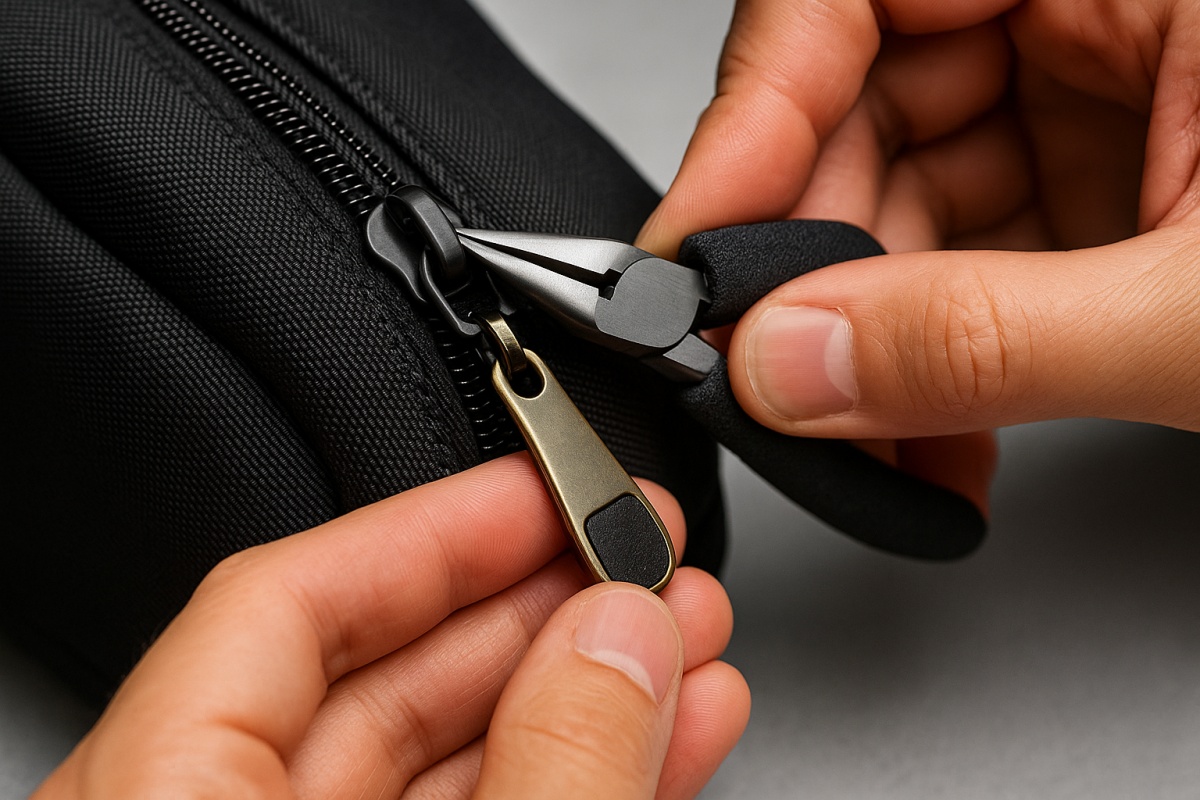
Puller vs. Slider vs. Tape vs. Teeth/Coil
A zipper puller is the handle you grasp. It connects to the slider, the metal or engineered-polymer carriage that guides the two sides of teeth (metal or molded plastic) or coil (nylon) together along the woven tape. Failures typically fall into three zones:
-
Puller-only failure — lost, snapped, or deformed puller while the slider eye remains intact.
-
Slider failure — cracked eye/bridge, splayed rails, or worn crown that won’t maintain closing force.
-
Chain/tape failure — missing teeth, bent metal elements, broken molded teeth, melted or kinked coil, or torn tape.
When zones (1) and (2) are ruled in and (3) is ruled out, you can usually deliver a fast, reliable repair without replacing the entire zipper. Authoritative step-by-step trade guides confirm that sliders and pulls are often serviceable components when the chain and tape are sound. WAWAK Blog+1
Gauges (#3/#5/#8/#10) and Why They Matter
Gauge denotes the approximate size of the chain and dictates slider and puller compatibility:
-
#3 — small pouches, inner pockets
-
#5 — the most common for backpacks, handbags, and laptop sleeves
-
#8 — travel duffels and heavy-use gear openings
-
#10 — luggage lids and thick, high-tension entry points
A correctly sized puller engages the slider eye without binding or excessive play; a mismatch can produce noise, snagging, or poor closure. Retail repair catalogues consistently sort pulls/sliders by gauge and zipper type (coil vs. molded vs. metal) for this reason. zippershipper.com+1
Locking vs. Non-Locking Sliders
Auto-locking sliders include a tiny pawl that locks the chain when no downward force is applied to the pull; non-locking sliders glide freely. Some locking designs rely on the puller tab geometry to engage the pawl correctly; mixing incompatible geometries can cause “zipper creep.” Shop-verified how-to resources emphasize confirming slider type before selecting a pull. WAWAK Blog
Brand Compatibility (YKK, SBS, Riri, etc.)
Cross-brand replacement is often workable if gauge and zipper type match, but tolerances differ by manufacturer. Suppliers typically recommend test-fitting before bulk installs or standardized OEM changeovers. zippershipper.com
Can You Replace a Zipper Puller Without Replacing the Slider?
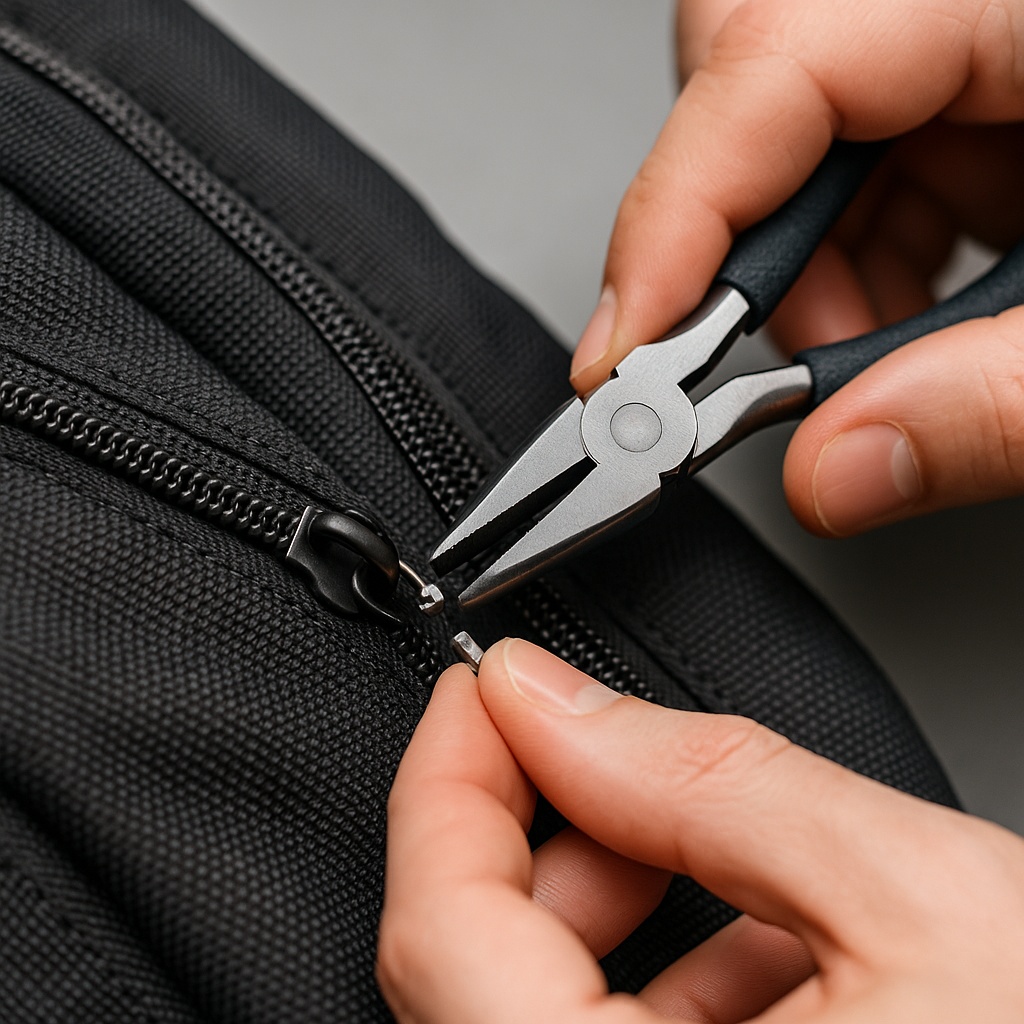
When the Answer Is “Yes”
If the slider’s eye/bridge (the loop that holds the puller) is intact and the chain closes smoothly, you can attach a new puller—often with a split ring, crimp-on hardware, or a cord loop—without removing the slider from the tape. Several vendor and brand tutorials show the entire process with only pliers and a protective cloth. WAWAK Blog+1
When You Should Replace the Slider (or the Whole Zipper)
Replace the slider + pull as a set if you observe any of the following:
-
A cracked or bent slider eye/bridge
-
Excessive wobble that fails to align teeth/coil
-
Severe corrosion or visibly splayed rails
-
Chains that re-open after closing (loss of holding force)
DIY and pro resources caution that “pinching” splayed rails may restore function temporarily, but recurring failure points to worn slider geometry—go straight to replacement. zippershipper.com+1
Time & Skill Estimate
A puller swap is typically 2–10 minutes. A slider swap—removing the top stop, sliding off the worn slider, installing the correct replacement, and re-attaching a top stop—runs 10–30 minutes for most bags. Visual guides from repair suppliers highlight the exact sequence and common pitfalls. WAWAK Blog
Minimal-Tool & No-Tool Methods (Fast Field Fixes)
Split-Ring (Key-Ring) Method
Steps: 1) Thread a small split ring through the slider eye; 2) close it; 3) optionally add a short fabric tab for comfort.
Pros: Ultra-quick, cheap, glove-friendly. Cons: Possible rattle; utilitarian look. This is one of the most frequently recommended field fixes for missing pulls. omybagamsterdam.com
Paracord or Fabric Loop
Tie a diamond knot or simple overhand loop; fuse nylon cord ends with heat to prevent fray. The larger loop improves leverage and winter-glove usability—ideal for outdoor packs and cooler bags. zippershipper.com
Micro-Pliers Crimp-On Pulls
Many replacement pullers ship as a U-shaped or hooked ferrule that you crimp around the slider eye with pliers. Pad the jaws with cloth to avoid gouging PVD or painted finishes—brand care pages and pro tutorials explicitly call out this protection step. omybagamsterdam.com
Temporary “Don’ts”
Paper clips, thin wire, and brittle plastics can deform, scratch panels, or snag linings. They’re acceptable only as short-term emergency measures; upgrade to a proper pull promptly. (This caution is echoed across sewing communities and vendor guides.) zippershipper.com
Step-by-Step: Replace a Zipper Puller on Common Bag Types

Everyday Backpack (#5 Coil)
-
Inspect the slider eye and coil; confirm no cracks, burrs, or melted sections.
-
Install a #5-compatible pull (split ring, cord loop, or crimp-on).
-
Run 20–30 test cycles and check corner torque where the track curves near the bag’s top.
Tip: If the chain closes but pops open behind the slider, the rails are worn—replace the slider; “pinch fixes” seldom last. WAWAK Blog
Travel Duffel (#8 Molded Tooth)
Choose heavy-duty metal or reinforced polymer pulls to tolerate higher bending moments along wide openings. After installation, pack the bag and flex the opening while zipping to replicate real use.
Laptop/Work Bags (#5/#8)
Pick quiet, non-marring finishes (matte PVD, e-coat, or TPR overlays) to avoid scratching devices. Consider auto-locking sliders for commuter bags that shouldn’t creep open.
Cooler/Outdoor Packs
Use corrosion-resistant metals (stainless, brass) or UV-stable polymers with rubberized overmolds for wet-grip ergonomics. Post-install, stress corners and radii with gloves on.
Child/School Bags
Prefer one-piece, oversized pulls secured robustly. Avoid small detachable charms on products intended for very young children; these can be small parts under certain regulations (details below). U.S. Consumer Product Safety Commission
Materials & Finishes: Durability, Feel, Compliance
Metals & Engineered Polymers
-
Zinc alloy (die-cast): Excellent shape freedom for logos; economical; robust for daily use.
-
Brass: High corrosion resistance and heritage aesthetics; takes e-coat well.
-
Stainless steel: Best-in-class corrosion resistance; slim, strong designs; ideal for marine/outdoor.
-
Reinforced Nylon/TPU with TPR overmold: Quiet, grippy, light; specify UV and hydrolysis stability for longevity.
Finishes & Tactility
-
PVD and e-coat improve wear resistance and deliver stable color libraries (black nickel, gunmetal, antique brass).
-
Matte hides micro-scratches; gloss reads premium but reveals scuffing sooner.
-
Rubberized/TPR overlays damp rattle and improve gloved grip.
Compliance Snapshot (2024–2025)
-
Small-parts safety (US): A “small part” is any object that fits entirely into the small-parts cylinder; banned on products intended for children under three. Pullers that detach and fit fully in the cylinder present a choking hazard. U.S. Consumer Product Safety Commission+2eCFR+2
-
EU small-parts paradigm: EN 71-1 (mechanical/physical) defines tests for small parts and abuse testing; while school bags aren’t toys, toy-like accessories can trigger obligations. law.resource.org+1
-
REACH Candidate List (EU): ECHA’s Jan 21, 2025 update brought the Candidate List to 247 entries, and industry monitoring indicates 250 after subsequent 2025 updates—obtain up-to-date SVHC declarations from hardware suppliers. echa.europa.eu+2TÜV SÜD+2
-
California Proposition 65 (US): Ongoing listings (e.g., certain phthalates, PFAS) continue to influence coatings and elastomer choices for pulls and overmolds; ensure supplier declarations remain current.
Practical takeaway: For kids’ SKUs or strict markets, favor stainless/brass or tested elastomers, require SVHC/Prop 65 statements, and retain traceability (lot codes, lab reports).
Sizing & Compatibility: Quick Reference
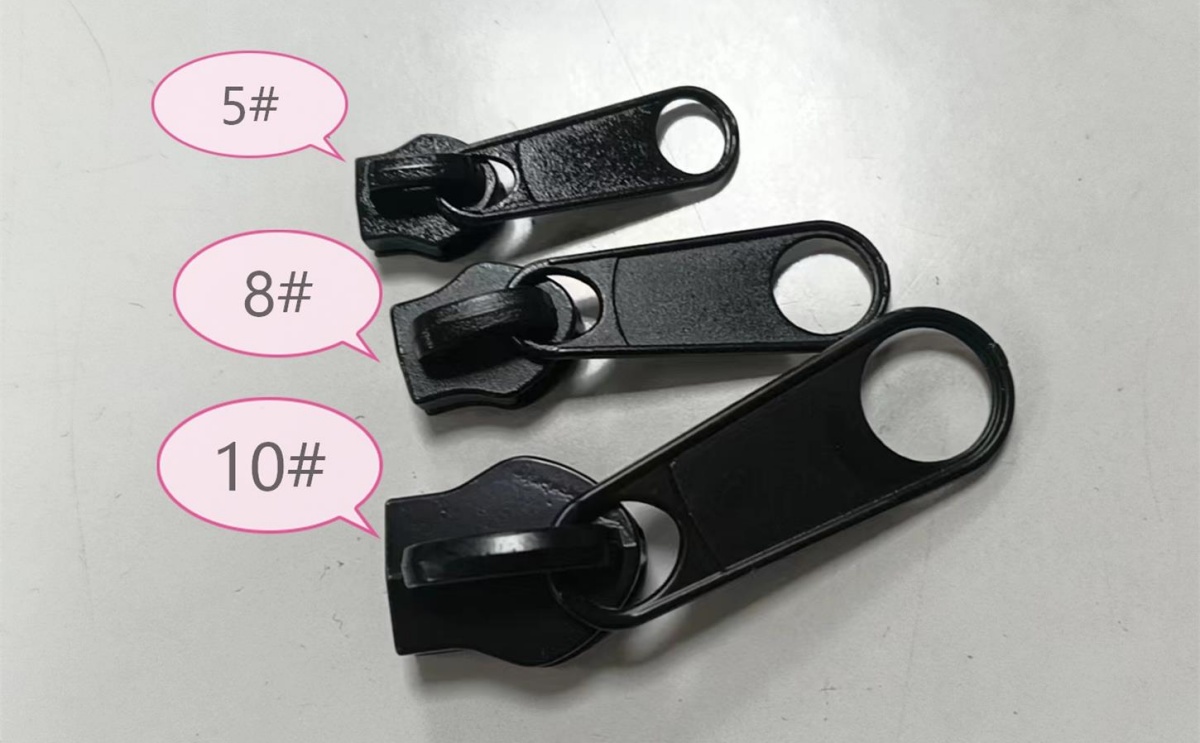
Gauge-and-Type Mapping Rules
Match the puller to both the slider gauge and zipper type:
-
Coil (nylon): Flexible, quiet; common on backpacks/handbags (#3/#5/#8).
-
Molded plastic: Thicker elements; common on duffels/luggage (#8/#10).
-
Metal: Classic look; frequent on leather bags and denim.
Table: Common Use Cases & Puller Choices
| Zipper Type (Gauge) | Typical Bag Use | Recommended Puller | Locking? | Notes |
|---|---|---|---|---|
| #3 Coil | Pouches, inner pockets | Light metal or polymer pull | Non-locking | Low load; gentle cycles |
| #5 Coil | Backpacks, handbags | Standard metal or TPR-overmold | Auto or non-lock | Most common in bags |
| #8 Molded | Duffels, travel gear | Heavy-duty metal/polymer pull | Often non-lock | Handles corner torque |
| #10 Molded/Metal | Luggage, gear cases | Oversized pull, reinforced | Non-lock | For thick panels, high load |
Supplier selection guides sort hardware this way and highlight the need for exact matching to avoid drag and premature wear. zippershipper.com+1
When You Must Replace the Slider (Not Just the Puller)
Wear Indicators
-
Wobble in the slider body
-
Teeth/coil close then re-open behind the slider
-
Split or bent crown/bridge
-
Persistent grinding or snagging even with a new pull
These symptoms indicate worn slider geometry; replacement is the durable fix. zippershipper.com
Basic Slider Replacement Workflow
-
Move the slider to the top; remove the top stop on the slider side (uncrimp or unpick).
-
Slide off the old slider; install a matching replacement (same gauge and zipper type).
-
Re-install a top stop (crimped or sewn bar-tack).
-
Validate with 20–30 cycles and a light-load test.
Vendor how-tos show each of these steps with photographs to reduce error. WAWAK Blog
Post-Repair Quality Checks
-
Function: smooth travel without pop-opens.
-
Load: partial pack test; flex corners and curves.
-
Alignment: both tape sides must feed symmetrically.
Cost, Time, and Sustainability
DIY vs. Pro Repair
-
Puller swap: a few dollars and a few minutes—often the fastest, most cost-effective remedy.
-
Slider replacement: still inexpensive relative to full zipper replacement or bag replacement; many retailers frame it as the default repair path when closures fail. zippershipper.com
Extend Product Life, Reduce Waste
Keeping a good bag in service is a straightforward circularity win. EPA’s material-specific accounting places textiles at ~17 million tons of municipal solid waste (2018 baseline), with significant landfilling—underscoring the impact of simple repairs like pull/slider replacement. Recent US GAO analysis reiterates the environmental burden of textile waste and the benefits of reuse and repair. US EPA+1
Policy Drift You Should Track
California’s Responsible Textile Recovery Act and similar EPR (extended producer responsibility) moves propose systems pushing brands toward reuse, repair, and recycling pathways—making repairable hardware a strategic design choice for bags. 卫报
Safety & Market Expectations (Kids’ Bags and Chemicals)
Small-Parts Hazard (Under-3 Products)
A part that fits entirely into the CPSC small-parts cylinder is a regulated choking hazard for products intended for under-3s. Designers should eliminate detachable small pulls for these SKUs, or design one-piece, oversized pulls integral to the slider. U.S. Consumer Product Safety Commission+1
EU Perspective: EN 71-1
EN 71-1 specifies mechanical/physical tests for toys, including small-parts and abuse testing. Although most school bags aren’t toys, toy-like accessories (charms, decorative pullers) sold for children can bring products into the test regime; suppliers and labs routinely advise conservative designs. law.resource.org+1
Chemicals & Labeling
Obtain current REACH SVHC declarations (247 entries as of Jan 21, 2025; industry tracking indicates 250 by later 2025 updates), and ensure elastomers/finishes align with Prop 65 expectations. Maintain a compliance matrix and archive lab reports and lot-level traceability. echa.europa.eu+2TÜV SÜD+2
Branding & Customization (B2B/OEM Angle)
Custom Logo Pulls
-
Die-cast zinc supports crisp 3D logos at competitive tooling costs.
-
Laser engraving on stainless/brass yields durable marks.
-
Soft enamel or epoxy infill provides brand color accents.
Standardize a finish library (e.g., black nickel, antique brass, PVD gunmetal) with validated corrosion/abrasion performance for consistent cross-line branding.
Corrosion & Abrasion Validation
Outdoor/travel lines benefit from salt-spray or humidity exposure testing of coated hardware. Pair this with tensile pull strength specifications for the pull-to-slider joint—set realistic thresholds by use case (e.g., higher for #8/#10 luggage openings). Supplier and service guides emphasize matching slider/pull to both gauge and environment. Rugged Thread
Bulk Sourcing Checklist
-
Engineering drawings with tolerances and gauge/type mapping
-
Material/finish specs and performance targets
-
SVHC/Prop 65 and small-parts assessments for relevant SKUs
-
AQL sampling and first-article sign-off
-
Lot traceability on inner packs & cartons for recall readiness
Troubleshooting After Replacement
Stiff Movement or Misalignment
Brush away lint; verify tape alignment into the slider; apply a tiny amount of zipper-safe lubricant if appropriate. Persistent resistance or “rail drag” suggests a worn slider—replace it.
Noise & Rattle
Switch to a TPR overmold or add a fabric tab to damp metal-on-metal contact. This is valuable for camera and laptop bags where acoustic comfort matters.
Field Re-Test Protocol
Run 20–50 cycles under realistic load. For duffels, flex corners and arcs while zipping; monitor whether the chain remains closed behind the slider.
Implementation Checklists
DIY Quick List (Consumers)
-
Identify gauge & type (#5 coil is most common on backpacks; #8 molded on duffels).
-
Confirm the slider eye is intact.
-
Choose a compatible pull (split ring, cord loop, crimp-on).
-
If closure still fails, install a matching slider (same gauge/type).
-
Validate with 20–50 test cycles and light-load use; recheck after a day.
OEM/Procurement Quick List (Brands/Factories)
-
Lock the gauge + slider type per SKU in your BOM.
-
Specify materials/finishes with corrosion/abrasion targets and approved color chips.
-
Collect SVHC/Prop 65 and (for children’s lines) small-parts assessments.
-
Approve first-article builds and set AQL.
-
Maintain lot traceability and archive lab reports for audits and retailer onboarding.
Key Insights & Decision Map
- How: Verify gauge (#3–#10) and zipper type; attach a split ring/cord/crimp-on pull; if closure fails, replace the slider; validate with 20–50 cycles.
- Why: A correctly matched pull restores function quickly, reduces warranty returns, and extends product life while cutting avoidable waste.
- What: Metals (zinc/brass/stainless) and polymer + TPR; finishes (PVD/e-coat); locking vs. non-locking compatibility and brand-fit tolerances.
- Options: DIY kits, OEM-grade slider+pull sets, corrosion-resistant specs for outdoor/travel, and authorized parts to preserve warranties.
- Considerations: CPSC small-parts rules for under-3s, EN 71-1 where toy-like accessories apply, REACH SVHC/Prop 65 monitoring, and traceability.
Reference Source List
-
WAWAK — “How to Replace a Zipper Pull,” editorial team, WAWAK Sewing Knowledge Base
-
O My Bag Amsterdam — “Replace a Zipper Pull Tab,” Care & Repair Page
-
Zipper Shipper — “Zipper Slider & Pull Tab Replacement Guide,” Technical Editorial
-
Instructables — “How to Fix a Zipper (No Replace),” Community How-To, Editors
-
U.S. Consumer Product Safety Commission — Small Parts Regulations, 16 CFR Part 1501
-
European Committee for Standardization — EN 71-1: Safety of Toys — Mechanical and Physical Properties
-
European Chemicals Agency (ECHA) — REACH Candidate List (SVHC) Updates, 2025
-
United States Environmental Protection Agency — Textiles in Municipal Solid Waste, Material-Specific Facts & Figures
-
U.S. Government Accountability Office — Reports on Textile Waste & Circular Economy (overview analysis)
Feature Product
-
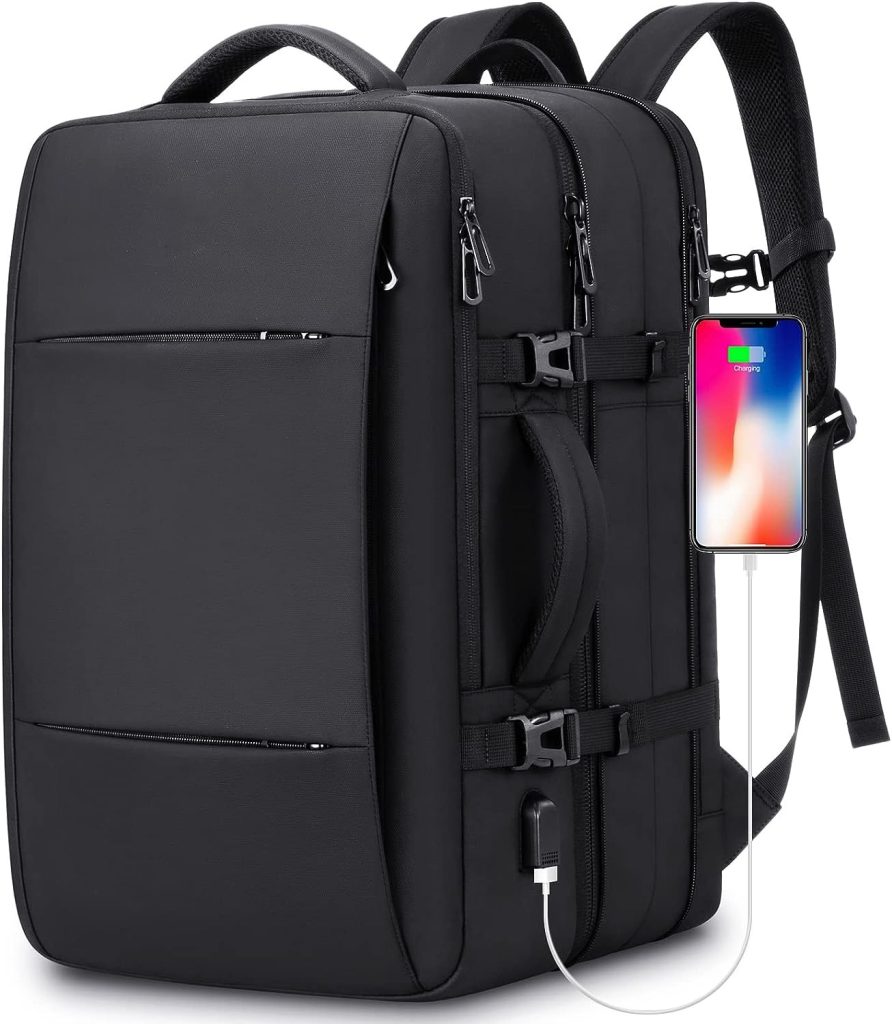 Durable Custom Backpack – Stylish, Functional, ...
Vedio Show Brand & Craftsmanship Storytel...